EMDR for Negative Beliefs: Can It Change How You See Yourself?
- Nikki Hirsch

- 6 days ago
- 5 min read
Maybe you know the thought isn't true.
You know you're a good person. You know that making a mistake doesn't make you a failure.
And yet, the same thought keeps showing up.
I'm not good enough.
I'm too much.
I'm a burden.
I'm not lovable.
Sometimes something happens and you're suddenly questioning yourself. Your partner seems distant and you wonder what you did wrong. You make a mistake at work and feel like you're not capable. Someone is disappointed with you and you feel responsible for fixing it.
You may even think, I know this isn't true. So why does it still feel true?
Sometimes these beliefs aren't just thoughts you can talk yourself out of. They can be connected to experiences that shaped how you learned to see yourself and what you learned to expect from other people.
This is one reason EMDR for negative beliefs can be helpful. The goal isn't to convince yourself to "think positive." It's to understand where these beliefs came from, process the experiences connected to them, and begin to see yourself from where you are now.
What Are Negative Core Beliefs?
Negative core beliefs are conclusions we develop about ourselves based on our experiences.
They can sound like I'm not good enough, I'm unlovable, I'm a burden, I'm powerless, or Something is wrong with me.
These beliefs don't necessarily come from one major event. They can develop through repeated experiences, such as criticism, rejection, having your needs dismissed, or learning that you had to be a certain way to receive approval.
When you're younger, you don't always understand the bigger picture.
You may think, My needs are too much.
You may think, I must not be worth treating well.
That conclusion may have helped you make sense of something painful at the time. The problem is that it can stick around long after the situation is over.
How Can EMDR Help With Negative Beliefs?
EMDR for negative beliefs isn't about repeating "I am worthy" until you believe it. If it were that simple, most of us would have figured this out by now.
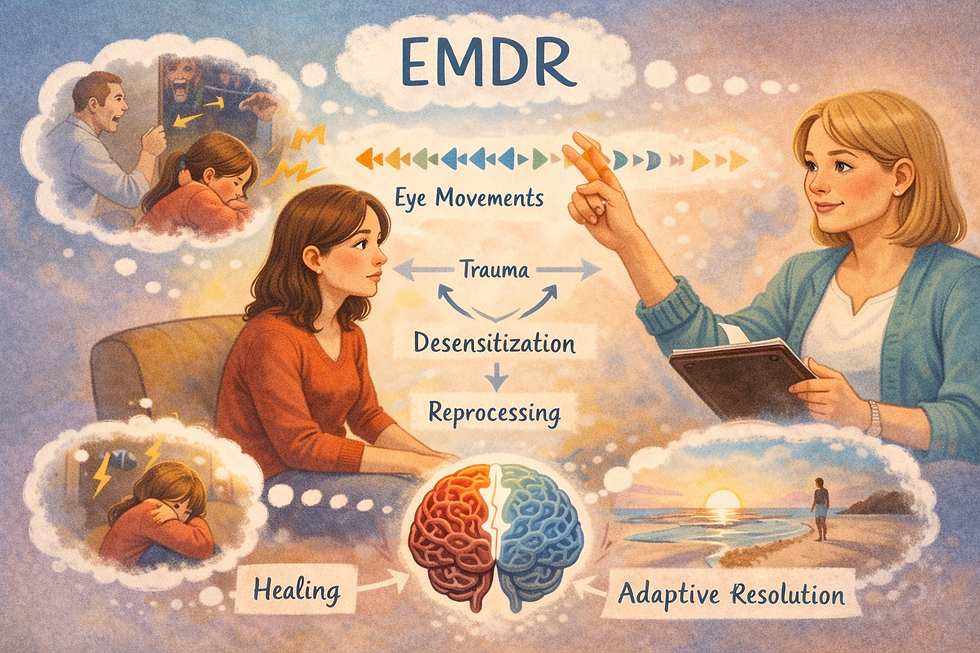
Instead, EMDR therapy looks at the experiences connected to the belief. You and your therapist may identify a memory or situation that brings up the belief. You may notice emotions, body sensations, thoughts, or images connected to it. Bilateral stimulation, such as eye movements or tapping, is used as part of the processing.
The goal isn't to erase what happened or pretend it wasn't painful. It's to help your brain process what happened so you can begin to recognize, That happened to me, but it is not happening to me now.
Someone who believes I'm not good enough may begin to recognize, I learned to measure myself this way, but that doesn't mean it's actually true.
The goal isn't to replace a painful belief with something fake. It's about getting to something that feels more true.
Why Doesn't Knowing Better Always Make You Feel Better?
You can know something intellectually and still have a completely different emotional reaction.
You might know your partner isn't your parent, but still feel panicked when they are upset with you. You might know a mistake doesn't define you, but still feel intense shame. You might know you don't have to make everyone happy, but still feel guilty when someone is disappointed.
That doesn't mean you're irrational.
Knowing something and feeling something are not always the same thing.
Some negative self-beliefs are connected to memories, emotions, body responses, and patterns that developed over time. Telling yourself to "just think differently" may not reach the part of you that learned the belief in the first place.
Does EMDR Replace Negative Thoughts With Positive Ones?
Not exactly.
The goal isn't to take a painful belief and replace it with something that doesn't feel believable.
If you made a mistake, you don't need to tell yourself that you did everything perfectly. If someone was disappointed with you, you don't need to convince yourself that nobody could ever be disappointed in you.
Instead, therapy can help you separate what happened from what you decided it meant about you.
There is a difference between I made a mistake and I am a failure.
There is a difference between Someone is upset with me and I am responsible for everyone's feelings.
There is a difference between This relationship ended and I am unlovable.
Sometimes the part that needs attention isn't just what happened. It's what you learned to believe about yourself because it happened.
What Does Healing Actually Look Like?
Healing doesn't necessarily mean you'll never have the old thought again.
You may still have moments when I'm not good enough pops into your head. What happens next may be different.
Maybe you notice it instead of immediately believing it. Maybe you recognize, This feels familiar, but that doesn't mean it's true.
Maybe you can make a mistake without turning it into a judgment about who you are. Maybe you can hear that someone is disappointed without immediately taking responsibility for making everything better.
You may even be able to ask, Is this actually about what is happening right now, or is something older getting stirred up?
Those changes can be subtle, but they matter. Sometimes healing is about having more choice in what you do with an old belief.
A Gentle Reflection
If you've carried the same belief about yourself for years, it can be easy to assume it must be true simply because it feels familiar.
But familiar doesn't always mean true.
Sometimes a belief developed during a time when you were trying to make sense of something painful or confusing. It may have helped you understand what was happening then, even if it no longer fits your life now.
EMDR for negative beliefs can offer a space to slow this down and get curious about what you've been carrying.
You don't have to force yourself to believe something positive. You don't have to figure everything out before you begin.
Sometimes healing starts with being able to say, I've believed this about myself for a long time. I'm not sure I want to keep believing it.
If you're located in New Jersey, New York, or Florida and you're beginning to question a belief you've carried about yourself, therapy can give you space to explore where it came from and whether it still fits.
You don't have to know exactly what you need before reaching out. You can start with what's showing up now and figure out the next step together, at a pace that feels right for you.
📍 NJ, NY, FL residents
💬 Virtual therapy
👉 Contact Internal Compass to schedule a consultation.
Frequently Asked Questions
Can EMDR help change negative beliefs about myself?
EMDR can help process experiences connected to negative beliefs. This may make them less emotionally powerful and allow a more grounded view of yourself.
What are negative core beliefs?
Negative core beliefs are deeply held conclusions about yourself, such as "I'm not good enough" or "I'm unlovable." They often develop through painful experiences.
Why do I know a negative belief isn't true but still feel it?
Some beliefs are connected to memories, emotions, and body responses rather than logic alone. You can know something intellectually and still feel something different.
Does EMDR erase negative thoughts?
No. EMDR does not erase memories or guarantee that a thought will never return. It can reduce the emotional intensity connected to past experiences so you have more space to respond differently.